 Skip to Main Content
Electrical Fixture Installation in Denton: Get It Wired Right the First Time
Trusted Denton electricians with over 50 years of experience
- Free estimates, verbal or written
- 50+ years of combined experience
- Serving all of Denton County
- 100% satisfaction guarantee
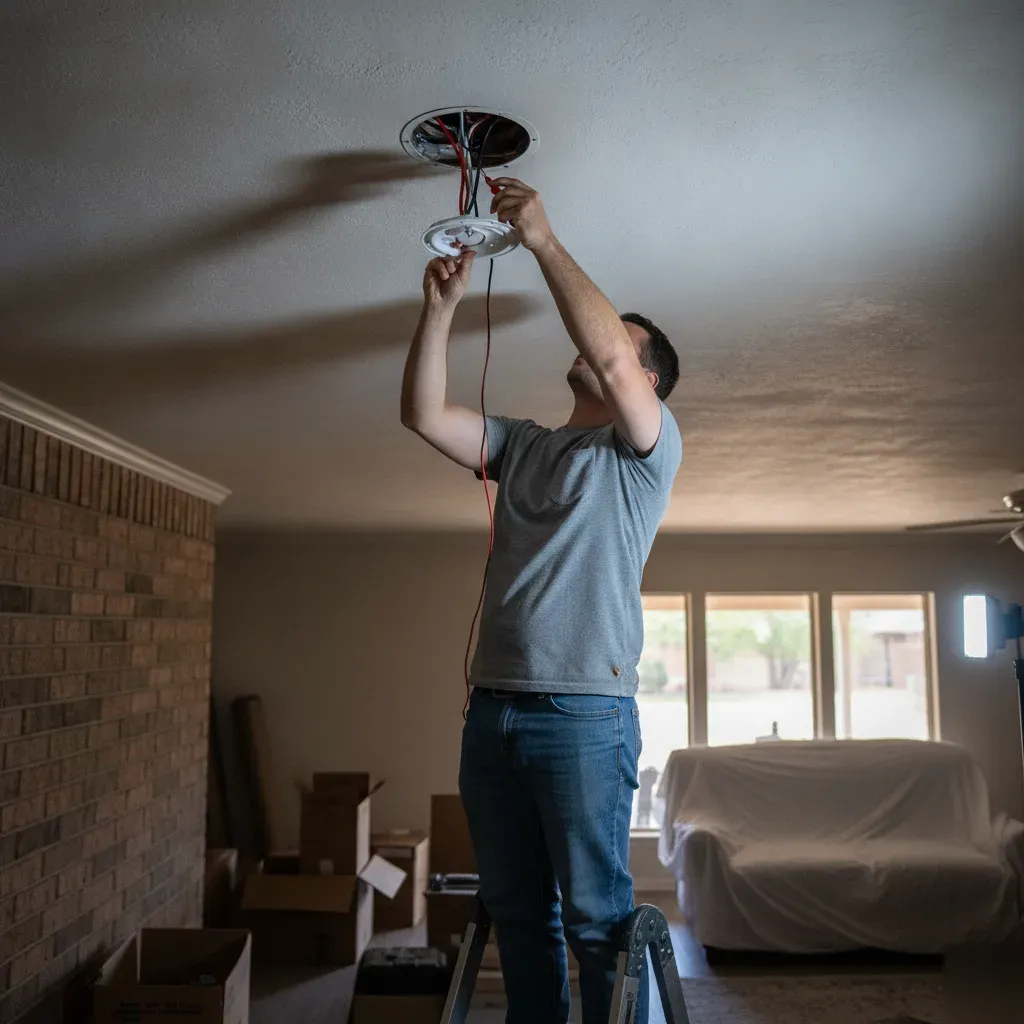
Need electrical fixture installation?
Get a Free Estimate
What's Behind the Fixture Determines the Job
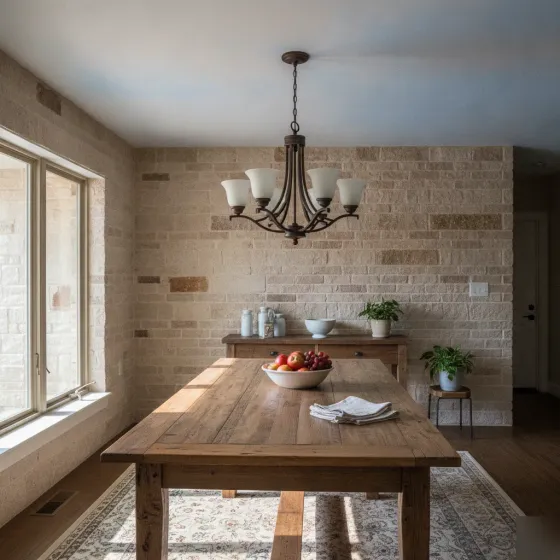
Quick Summary: A ceiling fan needs a rated box and real support behind the ceiling. A chandelier needs the right wire gauge and a box that can hold the weight. Outdoor fixtures need a box built for weather. The fixture on the end of that wire decides how the whole job gets done.
Here's the thing folks don't always think about. A light switch swap and a ceiling fan install look similar on paper. Both involve wires and a box on the ceiling or wall. But they are not the same job at all, and treating them the same is how people get hurt or burn out a fixture in six months.
We run into this constantly in older Denton homes near downtown, where original boxes were only rated for a light fixture, not a fan. Add 20 or 30 pounds of spinning fan to a box that was never braced for it, and eventually something gives. Sometimes it's a wobble. Sometimes it's the box pulling loose from the ceiling joist altogether.
- Ceiling fans need a fan-rated box with brace support, not a standard light box
- Chandeliers and pendants need the right wire gauge for their weight and often a taller mounting bracket
- Outdoor fixtures need a weatherproof box and gasket to keep moisture out of the wiring
- Recessed lighting needs a box rated for the insulation type in your attic
So before we ever touch a screwdriver, we look at what the fixture weighs and what it needs behind the wall or ceiling. That's the real work. Anyone can hang a light. Matching the box, wire, and support to that specific fixture is what keeps it safe for the next fifteen years.
Ceiling Fans and Heavy Fixtures Need a Properly Rated Box
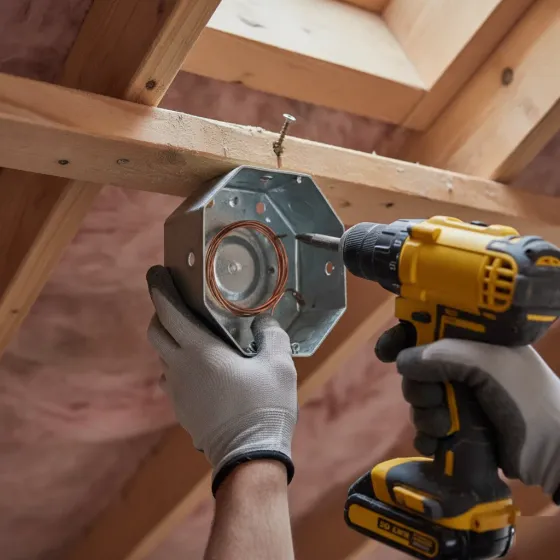
Here's something a lot of folks don't think about until a fan starts wobbling. Not every electrical box in your ceiling can hold a fan. A lot of them were only ever meant for a light fixture, something light and stationary. Add a spinning ceiling fan to that box, and over time you get shaking, squeaking, sometimes the whole thing pulling loose from the ceiling.
We run into this constantly in older Denton homes built back in the 70s and 80s, especially around the neighborhoods near the University area where a lot of original wiring and boxes are still in place. Those boxes were fine for their time. They just weren't built to carry the weight and vibration of a fan running for years on end.
A fan box has to be rated for the job, usually marked right on the box itself, and it has to be anchored to a joist or braced properly so it can handle constant motion. Heavy chandeliers and big pendant lights need that same kind of support. Skip this step, and you're not just risking a rattle, you're risking the fixture coming down.
- Fan wobbles or sways even after the blades are balanced
- Ceiling shows small cracks or gaps around the mounting plate
- Fixture feels loose when you gently pull down on it
- Box is plastic and not marked as fan rated
- Old light fixture is being swapped for a fan without checking the box
So before you buy that new fan, take a look up there. If the ceiling was only ever built for a light, the box needs to change too. As a licensed electrical contractor working across Denton County, we check the box first, every time, before we ever hang the fan.
When a Fixture Job Doesn't Need an Electrician
Not every fixture job needs a call to us. Screwing in a new lightbulb? Swapping a lamp shade? Plugging in a floor lamp you bought at a Denton furniture store? You've got that covered.
Here's the honest line we draw. If a fixture plugs into an outlet and doesn't touch your home's wiring, it's a plug-and-play job. No permit, no panel work, no risk to the circuit. Battery-powered puck lights under a cabinet, a plug-in wall sconce, a lamp with a broken switch you're replacing with an identical part - these are fine for a Saturday afternoon project.
So when does it stop being a DIY job?
- The fixture is hardwired into a junction box in the ceiling or wall
- You need to run new wire to a spot that never had power before
- The existing wiring looks old, cracked, or doesn't match what the new fixture needs
- You're touching anything connected to the breaker panel
That last one matters a lot in Denton. A good chunk of the housing stock here dates back decades, and older homes near the downtown square sometimes still have wiring that hasn't been touched since the original build. Once you're dealing with hardwired boxes and older wiring together, that's not a weekend project anymore.
Often folks call us after they've already tried the plug-in stuff and hit a wall. That's normal. There's no shame in knowing where your comfort level ends.
Have questions? We're happy to help.
Get a Free Estimate. Higher Power Electric is ready to help.
How a Professional Fixture Installation Works Start to Finish
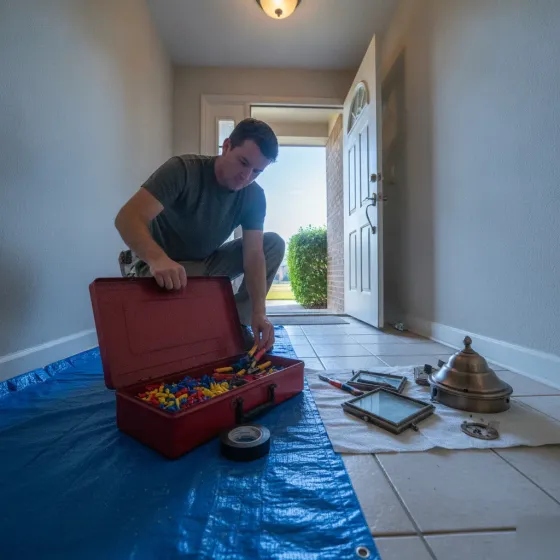
Most folks picture a fixture install as grab a ladder, screw it in, done. It's not, and that gap is exactly why so many DIY jobs end up loose, flickering, or worse. We treat every install the same way whether it's one ceiling fan or a whole room of recessed lights.
- We check the existing wiring and box before anything gets mounted. Old homes near downtown Denton often have boxes that were never rated for the weight of a modern fixture.
- We confirm the circuit can handle the new load. This matters more with fans and multi-bulb fixtures than people expect.
- Power gets shut off at the breaker, not just the switch. We test it dead before we touch a single wire.
- The old fixture comes down and we inspect the wire nuts and connections behind it.
- We mount a proper electrical box rated for the fixture weight, especially for fans or heavy chandeliers.
- New fixture goes up, wires get connected and capped, and we test the switch before we call it finished.
- We clean up, walk you through the switch and any settings, and make sure it's solid before we leave.
Step three trips people up every time. A switch being off doesn't mean the box is dead, and we've found hot wires on jobs where the homeowner swore the power was out.
Fan installs take longer than a light fixture. That extra box and bracket step isn't optional, it's what keeps a ceiling fan from working loose over time.
Outdoor lighting adds a wrinkle too. Denton's clay soil shifts with our wet and dry seasons, so fixture boxes near patios and walkways need solid anchoring or they'll work loose within a year.
Licensing and Permits for Fixture Work in Denton
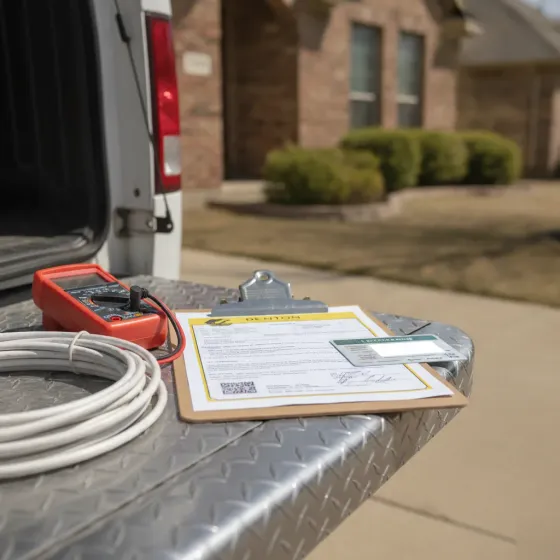
Here's something a lot of folks don't think about until it's too late. Swapping a light fixture yourself is usually fine. But once you're adding new wiring, moving a box, or tying into a circuit that wasn't there before, the City of Denton generally wants a permit and an inspection on that work.
We get asked about this constantly. Some folks assume any fixture swap needs a permit, or they assume none of it does, and both guesses are wrong.
- A straight fixture-for-fixture swap on an existing circuit usually doesn't need a permit.
- Adding a new circuit, box, or outdoor lighting run typically does.
- Older homes near downtown Denton often have wiring that isn't up to current code, which can trigger extra inspection steps once a wall gets opened up.
That last one matters more than people expect. Older Denton neighborhoods still have plenty of homes running on wiring from decades back, and pulling one fixture can uncover a bigger issue behind the wall.
This is where hiring a licensed electrical contractor protects you, not just the wiring. Higher Power Electric is a licensed electrical contractor serving Denton County, so which jobs need a permit pulled and which don't. And if an inspector does need to sign off, we handle that conversation, not you.
So before you hire anyone for fixture work, ask them straight out whether your job needs a permit. If they hesitate or brush off the question, that's a red flag worth paying attention to.
A fixture is only ever as sound as the circuit feeding it, so if the wiring in that room is original to the house, electrical wiring repair in Denton is the job that comes first, and a full electrical inspection will tell you whether the rest of the house is in the same condition. You can see how fixture work fits with everything else we do on our electrician services in Denton page.
Frequently Asked Questions
Common questions about electrical fixture installation
How fast can you get someone out to install a light fixture in Denton?
We schedule most fixture installations within a few days of your call. If you're dealing with a fixture that's sparking, smoking, or hanging loose from the ceiling, tell us that up front so we can move you up the list. For a standard swap like a new pendant or ceiling fan, we'll set a time that works around your schedule. We cover homes across Denton County, from downtown to the neighborhoods near the University.
What should I expect when the electrician arrives at my house?
Expect us to check your wiring and box before we touch anything. We look at the existing junction box, confirm the circuit can handle the new fixture, and shut off power at the breaker, not just the switch. This matters a lot in older Denton homes where original boxes were never rated for a modern fixture. We test everything is dead before we start, then walk you through the finished work before we leave.
Why does my ceiling fan wobble after installation in my older Denton home?
A wobbling fan almost always means the electrical box behind it wasn't rated to hold a fan. We run into this constantly in Denton homes built in the 70s and 80s, especially near the University area, where original boxes were only meant for light fixtures. Adding a spinning fan to that box causes shaking and can eventually pull it loose from the joist. Swapping in a properly rated, braced fan box usually fixes it for good.
Can I install a new light fixture myself, or do I need an electrician?
You can handle it yourself if the fixture plugs into an outlet, like a lamp or plug-in wall sconce. But once a fixture is hardwired into a junction box, or you need to run new wire, that's electrician territory. This comes up a lot in older Denton homes near the downtown square, where wiring hasn't been updated in decades. If you're touching anything near the breaker panel, it's time to call us.
How long does a typical fixture installation take?
Most single fixture jobs, like a ceiling fan or pendant light, take a few hours from start to finish. That includes checking your existing box, confirming the circuit, mounting a properly rated box if needed, and testing the switch before we leave. A room full of recessed lighting takes longer since each can needs its own box rated for your attic's insulation type. We'll give you a real time estimate before we start.
Do I need a permit to install a new light fixture in Denton?
Simple fixture swaps on existing wiring usually don't require a permit, but new wiring runs or panel work often do. This depends on the scope of the job and your specific property. We handle that conversation with you before work starts, so there are no surprises. If your home is older and the wiring hasn't been touched since it was built, we'll flag anything that needs more than a straightforward swap.
Our Electrician Services in Denton
- Electrical Outlet & Switch RepairDead outlets, GFCI trips and buzzing switches — including ungrounded two-prong wiring downtown.
- Electrical InspectionsRoom-by-room checks of panel, outlets and attic wiring, plus permit and storm-damage inspections.
- Electrical Panel RepairLoose lugs, corroded breakers and buzzing panels — fixing the fault instead of replacing the box.
- Electrical Panel Replacement or UpgradingWhen an older 60 or 100 amp panel can no longer carry the load, and what a full upgrade involves.
- Electrical Wiring InstallationNew permitted circuits for garages, workshops and additions, plus full rewires of older homes.
- Electrical Wiring RepairFlickering lights, warm outlets and aging cloth or knob-and-tube wiring in older Denton homes.
- Network CablingWired ethernet drops for homes and offices where Wi-Fi cannot reach through plaster or brick.
- Generator Interlock InstallationSafe, code-compliant backup power from a portable generator, matched to your panel brand.
See every service on our Electrician in Denton page.
Request a Free Estimate
Tell us what you need and we will call you back — usually the same day.
Ready to Get Started?
Get a Free Estimate. Call (972) 971-2131 today.