 Skip to Main Content
Outdoor Lighting Installation in Denton That Keeps Your Home Safe After Dark
Trusted Denton electricians with over 50 years of experience
- Free estimates, verbal or written
- 50+ years of combined experience
- Serving all of Denton County
- 100% satisfaction guarantee
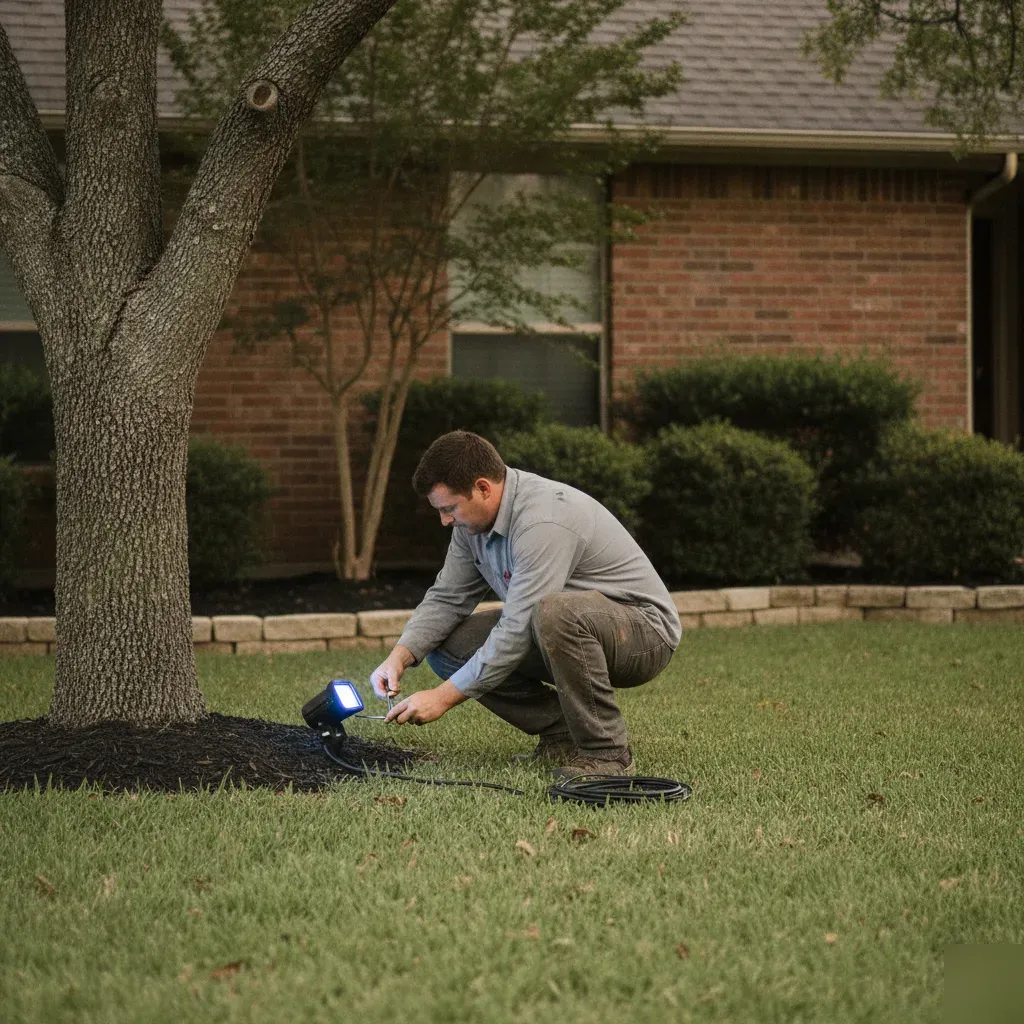
Need outdoor lighting installation?
Get a Free Estimate
Line-Voltage vs. Low-Voltage: Choosing the Right Outdoor Lighting System
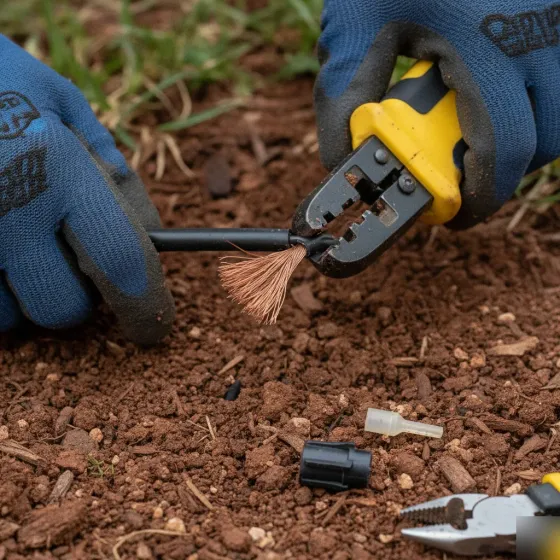
Quick Summary: Low-voltage systems run on a transformer and are safer for DIY touch-ups, while line-voltage lighting ties straight into your home's 120-volt wiring and needs a licensed electrician. Denton's clay soil and older neighborhoods near downtown often push homeowners toward professional installation either way, since buried cable has to be done right the first time.
Here's the thing most folks don't know until they start shopping for outdoor lighting: there are two totally different systems out there, and they behave nothing alike. Low-voltage systems use a transformer to step your home's power down to around 12 volts. That's the same range as a lot of landscape lighting kits you'd find at a hardware store. Line-voltage systems run at full household power, 120 volts, wired straight into your electrical panel.
So which one do you need? Depends on what you're lighting and how far the run is. Low-voltage works great for pathway lights, small accent fixtures, and shorter distances from the house. Line-voltage makes more sense for larger fixtures, longer runs across the yard, or anything tied into an existing outdoor circuit. We see this every single week: someone bought a low-voltage kit online, then found out their yard's too big for the transformer to handle every fixture evenly.
Denton's older homes, especially ones built before updated wiring codes came through, sometimes don't have an outdoor-rated circuit ready to go. That changes the job from a simple lighting install to panel work first. Our team checks the panel before we ever touch a shovel.
Line-voltage work involves cutting into your home's wiring, and that's not a weekend project. Miswired outdoor connections near soil and moisture are a real fire and shock risk, full stop. This is one job where licensed work isn't just a nice-to-have.
When Solar or String Lights Are Enough (And When They're Not)
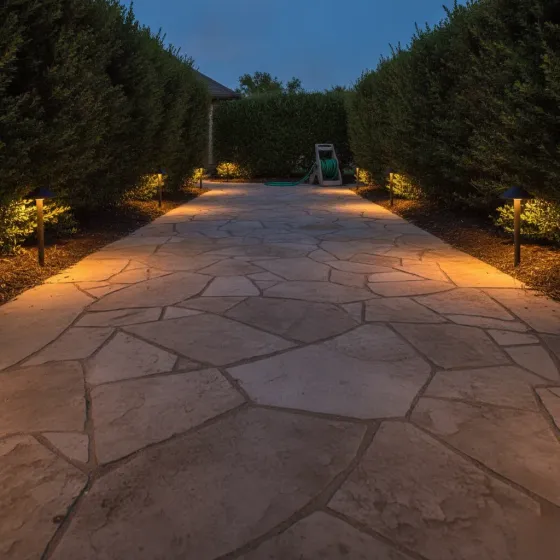
Let's be honest for a second. Not every dark porch needs an electrician. If you just want a little glow along a walkway or some warmth on the patio for a weekend party, solar stakes or a string of plug-in lights will do the job fine. We'd rather tell you that upfront than have you call us for something you can handle yourself.
- Solar path lights for a short stretch of sidewalk or a flower bed border
- String lights strung across a patio or pergola for a party or seasonal look
- Battery-powered spotlights for a temporary highlight on a tree or flag
But here's where solar and string lights fall apart. Denton's clay-heavy soil shifts a lot with our wet spring and dry summer swings, so stakes lean, connections corrode, and by August half your solar lights are dim or dead. That's not a knock on the lights, it's just what our ground does to shallow-mounted gear.
If you want lighting that covers your whole front yard, highlights architecture, or needs to run every night without you swapping batteries, that's a real wiring job. Low-voltage systems need a transformer, buried cable, and fixtures set at the right depth and distance so nothing overloads or trips. Often when someone calls us about landscape lighting, it's because the plug-in version already let them down once.
Inside a Denton Outdoor Lighting Installation, Step by Step
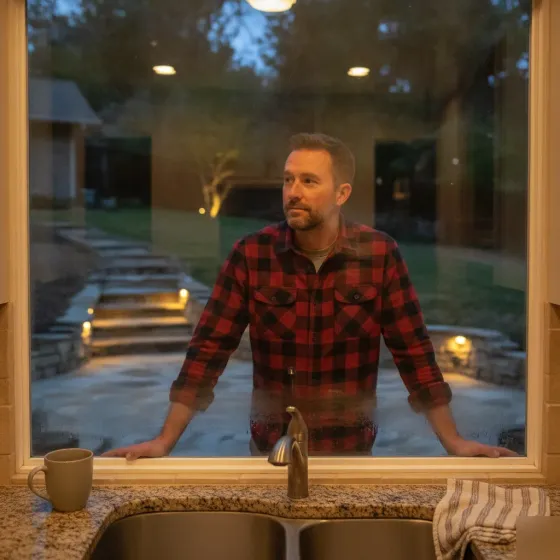
So what happens on the day we show up? People ask this a lot, and , most of it is pretty straightforward once you break it down.
- We walk the yard with you first and mark where you want light, not just where wire happens to reach.
- We check your electrical panel to confirm there's a safe circuit to pull from, or if you need a dedicated one added.
- We plan the wire path, keeping runs away from sprinkler lines and root systems where we can.
- We dig the trench. Denton County's clay soil is dense and holds moisture, so we bury cable deep enough that it won't heave up during a wet fall or crack during a dry summer.
- We run the wire, set the fixtures, and connect everything to a transformer sized for the whole system, not just what's going in today.
- We test every fixture, adjust the aim, and walk the property again once it's dark out to check the actual look.
- We clean up the trench lines and haul off any leftover material before we leave.
That last walk-through in the dark matters more than people expect. A light that looks fine at noon can throw a totally different shadow at 9pm, and we'd rather catch that ourselves than have you call us back about it.
Usually the trenching step is what takes the longest, not the wiring itself.
Most jobs run one day for a typical yard, longer for bigger properties or if we're adding a new circuit at the panel. We'll tell you upfront which situation you're in before we ever pick up a shovel.
Have questions? We're happy to help.
Get a Free Estimate. Higher Power Electric is ready to help.
Bringing Older Exterior Wiring Up to Code
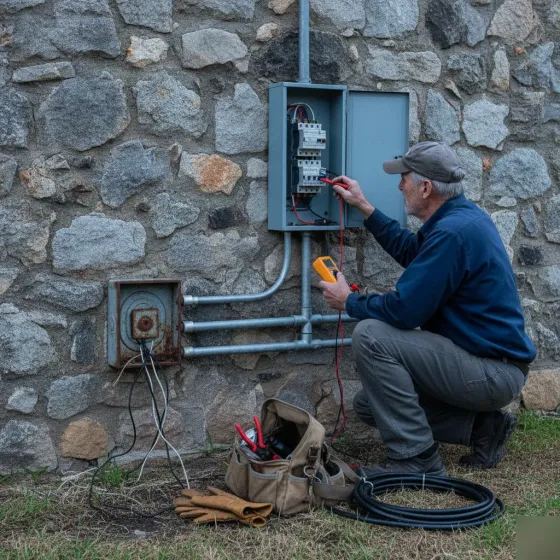
A lot of homes around Denton were built decades before anyone worried about outdoor lighting circuits. That old wiring wasn't wrong for its time. It's just not built for what you're asking it to do now.
We see this every single week. A homeowner wants a few path lights and some uplighting on the porch, and the panel has one open slot left, no GFCI protection outside, and wiring that's brittle from age. You can't just tap into that and call it done. Not safely, anyway.
- No GFCI or weather-resistant outlets on the exterior
- Aluminum wiring instead of copper, common in homes from the 1960s and 70s
- A panel already maxed out with no room for a new circuit
- Old wire nuts or splices buried in the yard with no junction box
Any one of those means we fix the foundation first. It's not an upsell, it's just how outdoor lighting installation has to work if you want it to last. Skipping that step is how people end up with flickering lights, tripped breakers, or worse, a fixture that shorts out the first time it rains.
So we start with an inspection, not a sales pitch.
We check the panel, trace the exterior circuits, and test grounding before a single fixture goes in the ground. If your wiring's solid, great, we move fast. If it's not, we'll tell you exactly what needs to change and why, in plain terms you can use to make a decision.
What Affects Outdoor Lighting Installation Costs
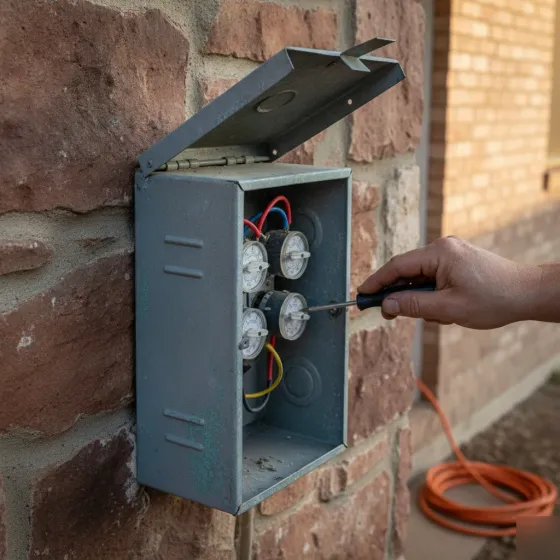
Every yard is different, so every quote looks a little different too. That's just the truth of it. A small path lighting job with four fixtures costs a lot less than wiring up a full front and back yard system with a transformer and a dozen lights.
The biggest driver is fixture count. More fixtures means more wire runs, more connections, more time on the ladder or on our knees in the dirt. Trenching distance matters too. If your panel or transformer sits far from where you want the light, we're running wire a long way, and that adds labor.
Denton's clay-heavy soil plays a role here. It compacts hard in summer and shifts when it's wet, so trenching can take longer than folks expect. We factor that into the timeline, not just the price.
- Number and type of fixtures - path lights, uplights, and deck lights each install differently
- Distance from the power source to the fixture locations
- Whether you want a smart timer or app-based control versus a basic photocell
- Soil conditions and how much digging the trenching requires
- Whether your existing panel has room for the new circuit or needs upgrading first
Ask any electrician what's driving their number before you sign anything. A fair quote should break down fixtures, wire, and labor separately, not just hand you one lump total.
We offer free estimates, verbal or written, on just about any job, so you know what you're working with before we ever pick up a shovel.
Exterior work leans on the panel more than people expect, so a lighting plan often arrives alongside outlet and switch installation for weather-rated exterior outlets, or EV charger installation where the driveway is being wired at the same time. Our electrical installation services in Denton page lists the full range.
Frequently Asked Questions
Common questions about outdoor lighting installation
How long does outdoor lighting installation take in Denton?
Most yards take one day from start to finish. Bigger properties or jobs that need a new electrical circuit added at the panel can run longer. Trenching through Denton's dense clay soil is usually the slowest part, not the wiring itself. We walk the property with you first, check the panel, then dig, wire, and test every fixture before dark so we can adjust the aim while the sun's down. We'll tell you upfront which timeline fits your yard.
Do I need a licensed electrician for outdoor lighting installation?
Yes, if you're installing line-voltage lighting tied into your home's 120-volt wiring. That work connects straight to your electrical panel, and miswired outdoor connections near soil and moisture are a real fire and shock risk. Low-voltage systems, which run through a transformer at around 12 volts, are safer for smaller DIY touch-ups. But many Denton homes near downtown have older wiring that needs a licensed check first anyway, so it's worth having a professional look at your panel before you start.
Can I just use solar or string lights instead of a wired system?
Solar stakes and string lights work fine for short-term or small-area needs, like a patio party or a flower bed border. They fall apart when you want lighting across a whole front yard or something that runs every night without swapping batteries. Denton's clay-heavy soil shifts with our wet spring and dry summer swings, so solar stakes lean and connections corrode fast. If your lights already let you down once, that's usually when it's time for a real wired system.
Why does Denton's soil matter for outdoor lighting installation?
Denton County's clay soil is dense and holds moisture, so cable has to be buried deep enough to survive it. Shallow burial can heave up during a wet fall or crack during a dry summer stretch. This is also why solar light stakes tend to lean and fail faster here than in sandier soil. We plan wire paths around sprinkler lines and root systems, then bury cable at a depth built for how this ground behaves across the seasons.
What if my home's electrical panel isn't ready for outdoor lighting?
If your panel doesn't have a safe circuit available, we add one before any lighting goes in. Older Denton homes, especially those built before updated wiring codes, sometimes lack GFCI protection outside or have a panel already maxed out. Skipping that step leads to flickering lights, tripped breakers, or a fixture shorting out in the rain. We start every job by checking the panel and tracing exterior circuits, not by jumping straight to fixtures.
What happens during an outdoor lighting installation visit?
We start by walking the yard with you to mark exactly where you want light, then check your panel for a safe circuit. After planning the wire path around sprinkler lines and roots, we trench, run wire, and set fixtures on a transformer sized for the whole system. We test everything and walk the property again once it's dark to check the actual look, then clean up the trench lines before we leave.
Our Electrical Installation Services in Denton
- Electrical Outlet & Switch InstallationNew outlets and switches wherever you need them, including GFCI for kitchens, baths and garages.
- Electric Car Charger InstallationTesla and Level 2 chargers, including the dedicated circuit and any panel work they depend on.
- Fan InstallationCeiling fans for bedrooms, living rooms and patios, mounted on a box actually braced to hold one.
- Light Fixture InstallationCeiling lights, pendants, chandeliers, recessed cans and under-cabinet lighting, wired and tested.
See every service on our Electrical Installation Service in Denton page.
Request a Free Estimate
Tell us what you need and we will call you back — usually the same day.
Ready to Get Started?
Get a Free Estimate. Call (972) 971-2131 today.