 Skip to Main Content
Fan Installation in Denton: Get It Wired Right the First Time
Trusted Denton electricians with over 50 years of experience
- Free estimates, verbal or written
- 50+ years of combined experience
- Serving all of Denton County
- 100% satisfaction guarantee
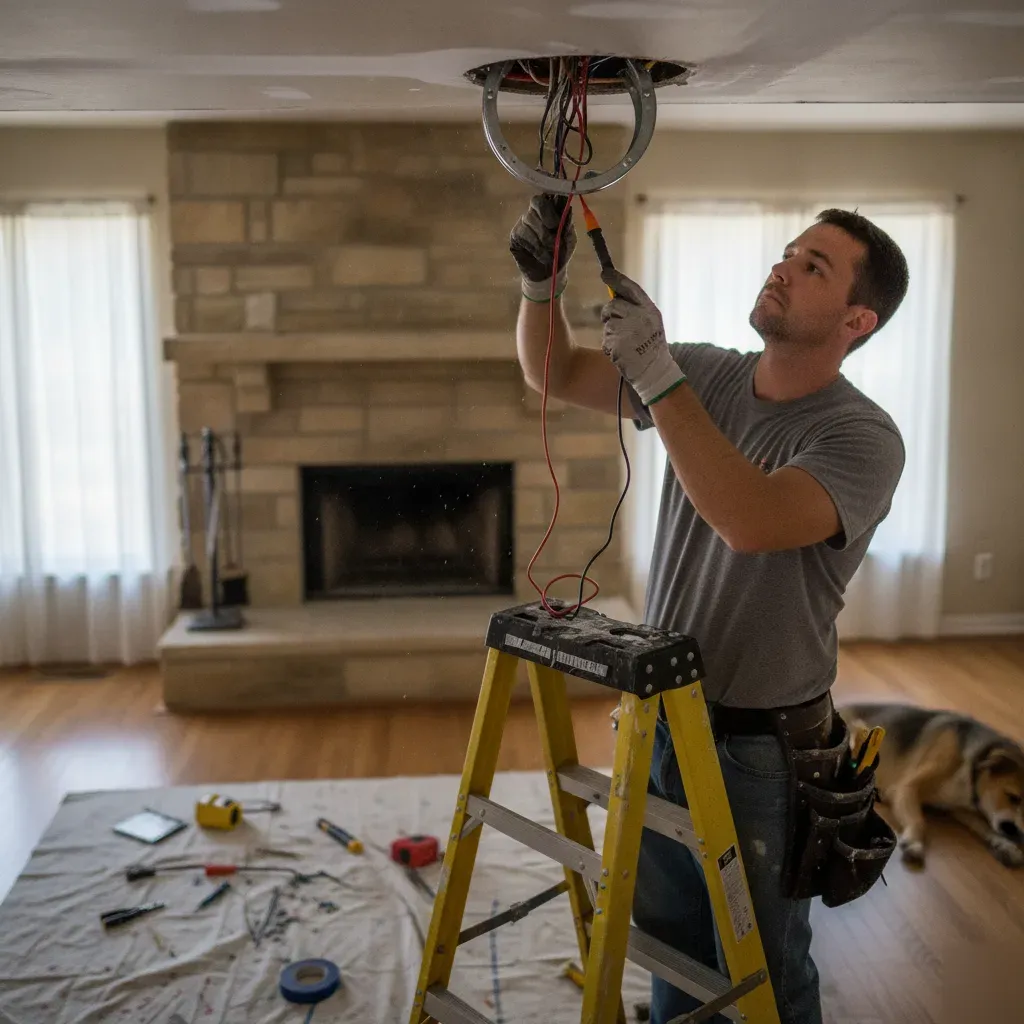
Need fan installation?
Get a Free Estimate
Spotting a Ceiling Box That Isn't Ready for a Fan
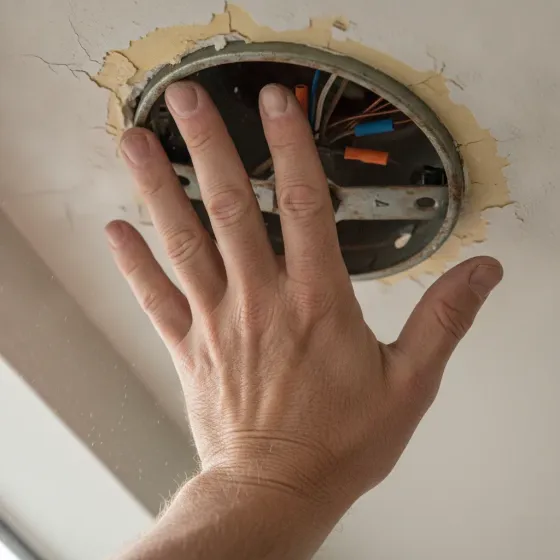
Quick Summary: Not every ceiling box can hold a fan. Some are only rated for a light fixture, and hanging a fan on the wrong box is a real safety risk. A few simple checks tell you if yours needs an upgrade first.
Look up. That's step one. If your ceiling box wobbles when you push on it, or the drywall around it looks cracked or stained, that's a sign it wasn't built for a fan's weight and motion. A fan pulls and shakes a box every time it spins, a light fixture just sits there. Two very different jobs for the same little metal box.
We run into this often in older Denton homes, especially places built before fan-rated boxes were standard. Houses near the University of North Texas area, a lot of them from the 60s and 70s, still have the original ceiling boxes meant for a light only. They were never built to handle a fan's constant motion, and swapping in a fan without checking the box first can lead to it pulling loose over time.
- The box wobbles or shifts when you push on it gently
- You hear a faint hum or rattle once a fan gets going
- The box has no visible brace bar connecting it to the joists
- Drywall around the box is cracked, bowed, or sagging
- The box is plastic or unmarked, with no fan rating stamped on it
No brace, no fan. That's the rule we go by every time. If any of these show up, the box needs to be swapped for one rated to carry a fan's weight and movement before anything gets hung. Skipping that step is how you end up with a fan crashing down months later, or worse, a fire risk hiding in your ceiling.
Why This Job Calls for a Licensed Electrician
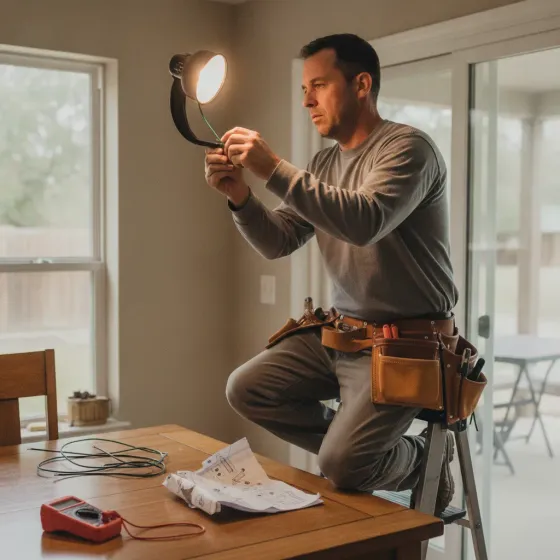
Here's the thing most folks don't realize. Hanging a fan isn't like hanging a picture frame. You're tying into a live circuit, working above your head, and often dealing with a box that was never rated to hold a spinning fan in the first place. A lot of homes around Denton still have the original ceiling boxes from when the house was built, and those boxes were made for light fixtures, not for something with weight and motion.
So what happens when the box isn't rated? The fan wobbles. Or worse, it pulls loose over time and the wiring inside starts to chafe. We've opened up more than a few ceiling boxes that were held together with nothing but hope and electrical tape.
A licensed electrician checks the circuit load before anything gets mounted. We look at the wire gauge, the box rating, and whether the switch setup can even handle a fan with a light kit. That's not something you can eyeball from the box the fan came in.
- Confirming the ceiling box is fan-rated, not just light-rated
- Checking the circuit isn't already overloaded with other fixtures
- Making sure the wiring inside the box is in good shape, not brittle or undersized
- Grounding the fixture correctly so a short doesn't become a bigger problem
We're a licensed electrical contractor serving Denton County, and that license exists because this stuff matters. A fan that isn't wired right doesn't just annoy you with a wobble. It can trip breakers, damage the motor, or in rare cases, start a fire inside the ceiling where you'd never see it coming.
Tasks You Can Handle Without Calling an Electrician

Let's be straight with you. Not every fan job needs us. If you're swapping out light bulbs, cleaning dusty blades, or tightening a wobbly fan that's just loose at the blade screws, you can knock that out yourself with a ladder and a screwdriver. Same goes for replacing a pull chain or switching out blades on a fan you already own, as long as the wiring underneath isn't part of the job.
- Cleaning fan blades and light kits to stop that annoying dust rain
- Tightening loose blade screws that cause wobble or noise
- Replacing a burnt-out light bulb or a broken pull chain
- Swapping blades for a new set on your current fan mount
- Reversing the fan direction switch for summer or winter airflow
Here's where it changes. The second you're mounting a new fan where there wasn't one before, or the existing box wobbles when you tug on it, that's a different job. A lot of homes near the University of North Texas area were built decades back with light fixture boxes that were never rated to hold a spinning fan. We run into this constantly. That box might hold a light fine but a fan's weight and vibration can pull it right out of the ceiling over time.
So if you're touching wires, adding a switch, or the box feels sketchy at all, stop there. That's not a Saturday project anymore, and getting it wrong can mean a fan crashing down or a fire risk hiding in your ceiling.
Have questions? We're happy to help.
Get a Free Estimate. Higher Power Electric is ready to help.
What to Expect During Your Fan Installation Visit
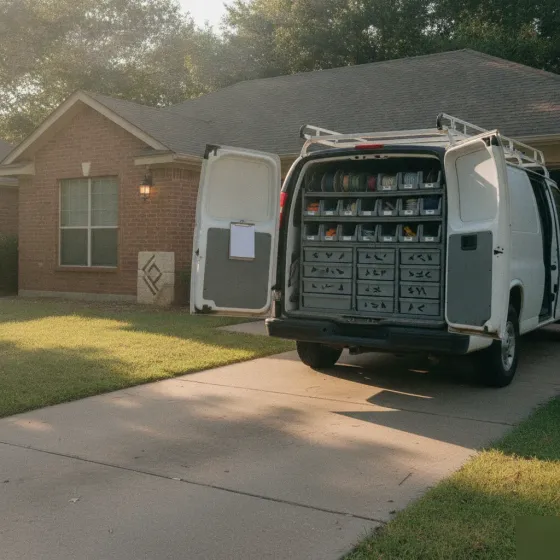
So here's what happens when we show up. Nothing fancy, no surprises. We knock, we introduce ourselves, and we ask you where the fan is going before we touch a single tool.
A lot of Denton homes were built decades ago with plaster ceilings instead of drywall, so the first thing we check is what's holding that ceiling up. Plaster needs different bracing than drywall does. Skip that step, and the fan wobbles or worse, it pulls loose down the road.
- We shut off power to the circuit and confirm it's dead before doing anything else.
- We check the existing box or open the ceiling to see what we're working with.
- We install a fan-rated brace box if the current one isn't rated for the weight and motion of a fan.
- We run or connect the wiring and mount the fan bracket securely to the brace.
- We hang the fan, wire it up, and test every speed and light setting before we call it done.
That brace box step trips people up every time. Folks often think their ceiling box is fine because a light fixture hung there for years just fine. A light fixture just sits there, a fan spins and pulls, that's a different load entirely.
Most installs take a couple hours, sometimes less if the wiring's already in a good spot. If we need to fish new wire through a wall or attic, it'll run longer. We'll tell you upfront if that's the case, not after we've already started cutting drywall.
Before we leave, we clean up, run the fan through every setting with you standing right there, and make sure it's balanced and quiet. A fan that ticks or wobbles isn't done yet, not in our book.
Keeping Your Fan Running Safely Through Denton's Hot Summers

Denton summers are no joke. When it's pushing triple digits, your ceiling fan isn't just spinning for comfort, it's running almost nonstop for months. That kind of workload puts real strain on the wiring and the box holding it up. This shows up a lot in July and August, a fan that's been fine all spring suddenly starts humming or wobbling once it's running twelve hours a day.
A lot of homes around Denton, especially older ones near the downtown square, still have ceiling boxes that were never built to hold a fan. They were made for a light fixture, plain and simple. Add a moving fan to that box and you've got a wobble waiting to happen, or worse, a box that pulls loose from the joist over time.
- The fan wobbles or shakes at higher speeds, not just a little sway
- You hear a clicking, humming, or grinding sound that wasn't there before
- The wall switch feels warm to the touch
- The fan slows down or stops on its own during the hottest part of the day
- There's a burning smell near the fixture, even faint
Any one of those is worth a call. So don't wait until it's smoking to take it seriously, that's the wrong time to find out the box wasn't rated for the job. A fan-rated box, secured to the framing, is the difference between a fan that lasts years and one that gives you trouble every summer.
Most of the time, the fix isn't the fan itself, it's what's holding it up.
The box behind a fan is the whole job, and the same is true of anything else hanging from that ceiling — which is why light fixture installation so often happens on the same visit, along with outlet and switch installation if the room needs a new control. Our electrical installation services in Denton page covers all of it.
Frequently Asked Questions
Common questions about ceiling fan installation
Do you install ceiling fans throughout Denton, or just certain neighborhoods?
We serve homes across Denton, including older areas near the University of North Texas where fan-rated boxes are rare. Those homes often need extra time for a box swap or bracing before the fan goes up. When you call, tell us the age of your home so we can plan for that possibility and give you a realistic arrival window.
What happens when the electrician arrives for my fan installation?
We start by shutting off power to the circuit and confirming it's dead before touching anything. Then we check your existing ceiling box to see if it's rated for a fan or just a light fixture. In Denton homes with plaster ceilings, we look at the bracing too, since plaster needs different support than drywall. Most jobs take a couple hours from there.
Do I need an electrician to install a ceiling fan?
Yes, if you're mounting a new fan or your ceiling box wobbles at all. A licensed electrician checks the wire gauge, confirms the circuit isn't overloaded, and makes sure the box is fan-rated before anything gets hung. Skipping this step is how fans end up pulling loose or damaging wiring inside the ceiling where you can't see it.
Can I install a ceiling fan myself to save time?
You can handle small jobs yourself, like cleaning blades, tightening loose screws, or swapping a pull chain. But once you're mounting a fan where there wasn't one before, or the box shifts when you tug on it, that's electrical work. Many Denton homes still have light-only boxes from decades ago, and a fan's weight and motion can pull those loose over time.
Why does my ceiling fan wobble after it was installed?
A wobble almost always points back to the ceiling box, not the fan itself. If the box lacks a brace bar tying it to the joists, it can't handle the pulling and shaking a spinning fan creates. We see this often in older Denton homes where the box was only ever rated for a stationary light fixture.
Are older Denton homes harder to wire for a new ceiling fan?
Sometimes, yes. Homes built in the 60s and 70s near the University of North Texas often have original ceiling boxes made for lights only, with no brace bar and sometimes brittle wiring. We open the box first to check the wiring condition and swap in a fan-rated brace before mounting anything, which can add time but keeps the fan secure long term.
Our Electrical Installation Services in Denton
- Electrical Outlet & Switch InstallationNew outlets and switches wherever you need them, including GFCI for kitchens, baths and garages.
- Electric Car Charger InstallationTesla and Level 2 chargers, including the dedicated circuit and any panel work they depend on.
- Light Fixture InstallationCeiling lights, pendants, chandeliers, recessed cans and under-cabinet lighting, wired and tested.
- Outdoor Lighting InstallationPorch, security and landscape lighting — design, trenching, wiring and timers.
See every service on our Electrical Installation Service in Denton page.
Request a Free Estimate
Tell us what you need and we will call you back — usually the same day.
Ready to Get Started?
Get a Free Estimate. Call (972) 971-2131 today.