 Skip to Main Content
Electric Car Charger Installation in Denton: Power Up at Home with Confidence
Trusted Denton electricians with over 50 years of experience
- Free estimates, verbal or written
- 50+ years of combined experience
- Serving all of Denton County
- 100% satisfaction guarantee
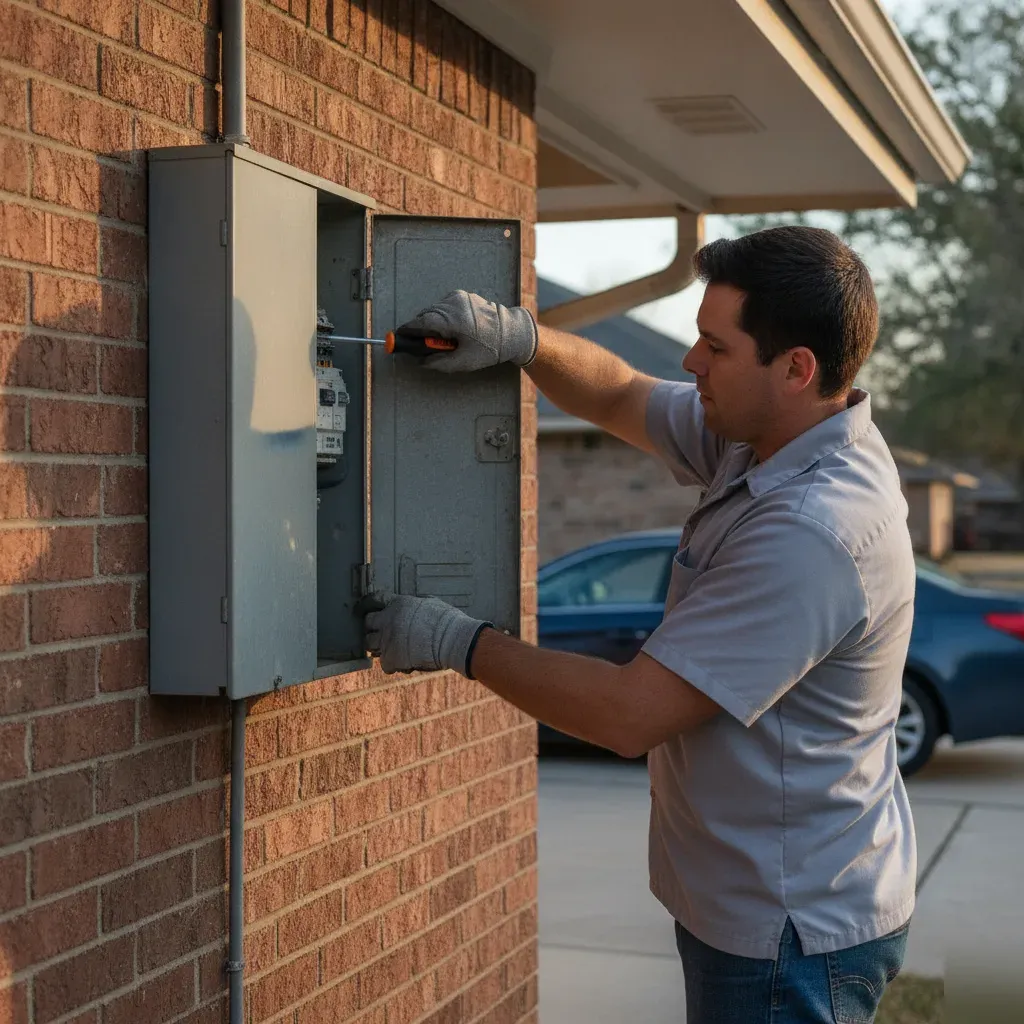
Need electric car charger installation?
Get a Free Estimate
Diagnosing Your Home's EV Charging Needs
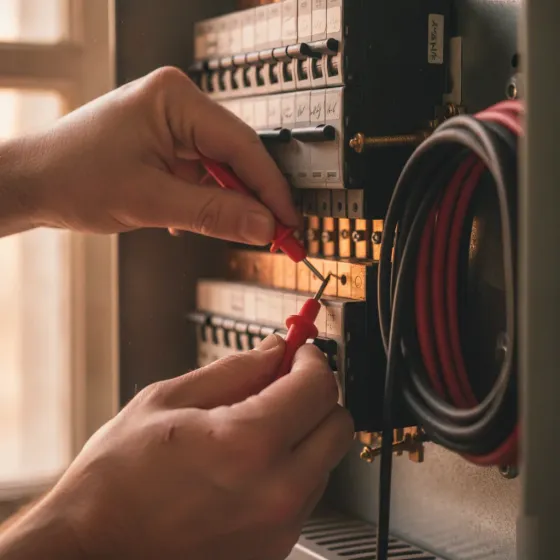
Quick Summary: Electric car charger installation isn't just mounting a box on the wall, it starts with checking whether your panel can handle the extra load. Many Denton homes built decades ago have 100 amp panels that need a real evaluation before a Level 2 charger goes in. Get the diagnosis right, and the rest of the job goes smooth.
Every electric car charger installation we do starts the same way. We look at your panel first, not the charger. That's the whole point. A lot of folks call us wanting a specific charger installed on a specific wall, and that's fine, but the real question is whether your electrical system can support it without tripping breakers or overheating wires.
Older neighborhoods near downtown Denton often have homes built with 100 amp service. That was plenty back then. Add a Level 2 charger pulling 40 to 50 amps and suddenly you're pushing that panel hard, especially if you're also running central air and a water heater on the same system. We check the panel's total capacity against what's already connected before we ever talk about where the charger goes.
Distance matters too. How far is your breaker box from where you park? A charger installed near the garage costs less in wire and labor than one that has to run conduit across the house. So we walk the property, measure the run, and check for any conduit or trenching needs before quoting anything.
- Panel amperage and available breaker space
- Distance from panel to charger location
- Existing load from AC, water heater, and other big circuits
- Whether a dedicated circuit is needed for the charger
- Indoor versus outdoor mounting and weather exposure
Skip this step and you risk a charger that trips breakers or worse, overheats a panel that wasn't built for it. We've seen it happen. Diagnosis first, installation second - that's the order that keeps you safe and keeps your charger running the way it should.
Panel Capacity Checks for Denton's Older Homes
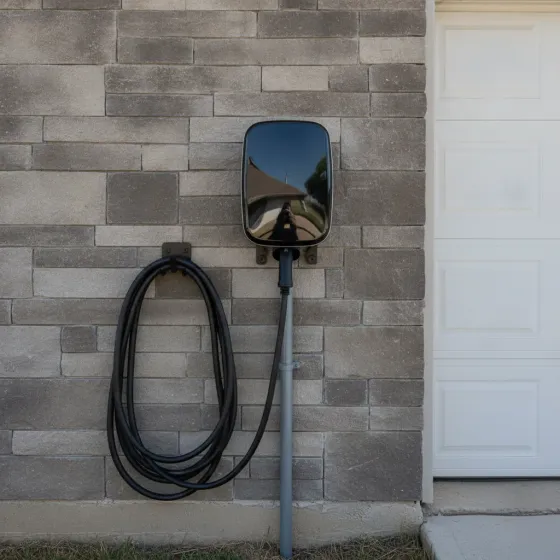
Here's the thing nobody tells you before you buy an EV charger: the charger isn't the hard part. Your panel is.
A lot of homes we work on around Denton were built in the 1960s and 70s, back when 100-amp service was standard and nobody was charging a car in the garage. Those panels ran lights, a stove, maybe central air. Add a Level 2 charger pulling 30 to 50 amps on top of that, and you're asking an old panel to do a job it was never built for. We check this first, every single time, before we talk about anything else.
So what are we looking for? A few things.
- The panel's rated amperage, stamped right on the door or the main breaker
- How much of that capacity is already used up by your AC, water heater, and other big loads
- Whether there's physical room left for a new breaker
- Signs of an older fuse box instead of a modern breaker panel
Often, homes near downtown Denton with original wiring need a panel upgrade or at least a load calculation before we install anything. That's not us trying to sell you extra work. It's just math, the panel either has the room or it doesn't.
And if it doesn't? We'll tell you straight. Sometimes that means upgrading the panel. Sometimes it means a smaller charger that fits what you've got. Either way, you'll know before we touch a single wire.
When a Dedicated Charger Circuit Isn't Necessary
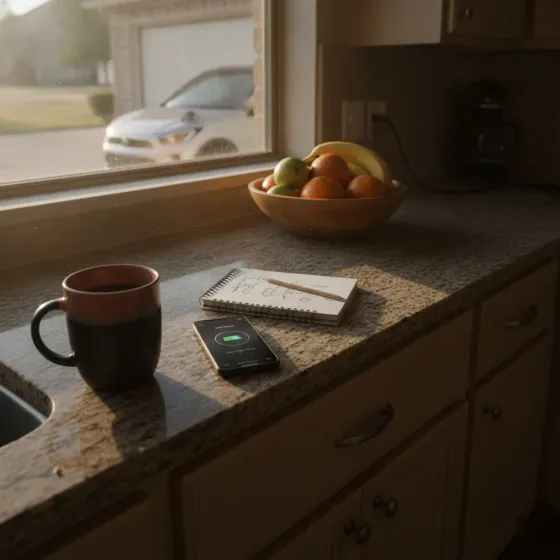
Not everybody needs a dedicated circuit. There, we said it. If you drive under 30 or 40 miles a day and you charge overnight, a regular 120 volt outlet in your garage might do the job just fine. That's called Level 1 charging, and it's slow, sure, but slow isn't always a problem.
Often folks call us assuming they need a whole new 240 volt circuit installed. And sometimes they don't. If your commute is short and your car sits plugged in for eight or nine hours overnight, that trickle charge adds up. A lot of newer Denton neighborhoods with attached garages already have a standard outlet sitting right there, unused, ready to go.
- You drive fewer than 40 miles most days and always charge overnight
- Your garage already has a grounded outlet in good condition
- You're not in a rush and don't need a full charge in a few hours
- You just bought the car and want to test your habits before spending on anything
Here's the thing though. That outlet still needs to be on its own circuit, not shared with the fridge or a chest freezer. Older Denton homes built before the 90s often have garage outlets tied into a general purpose circuit, that setup can trip breakers or overheat under a long charging session. So even skipping the dedicated 240 volt line, it's worth having someone check what that outlet is connected to.
If your driving habits change, or you add a second EV to the household, you'll probably outgrow Level 1 fast.
Have questions? We're happy to help.
Get a Free Estimate. Higher Power Electric is ready to help.
What to Expect During Installation, Step by Step
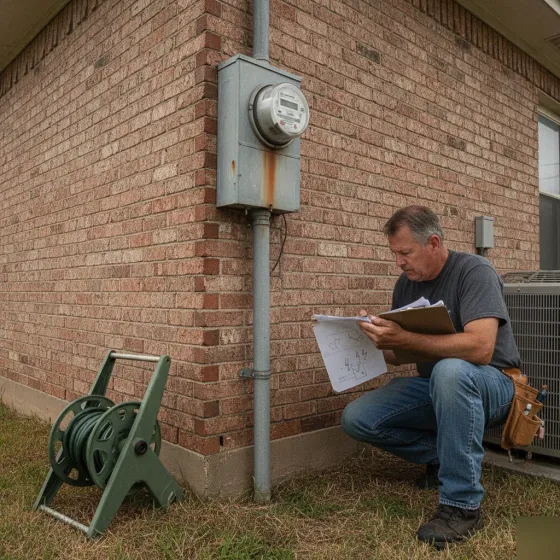
We show up, we check your panel, and we tell you straight what your house can handle. No guessing games.
A lot of homeowners near the older parts of Denton, where houses still run on smaller panels from decades back, think they just need an outlet in the garage. Usually it's more than that.
- We look at your electrical panel and figure out how much power it's already using.
- We run a load calculation to see if your panel can handle a new charger circuit without tripping anything else in the house.
- We run the wire from the panel to the charger location, through the garage wall or attic space, whatever your house needs.
- We mount the charger and connect the circuit, matching it to the charger's specs.
- We test the whole setup under load, not just a quick power-on check.
- We walk you through how to use it before we leave.
Most jobs take about half a day. Older homes sometimes take longer, especially if the panel needs work first.
And if your panel's maxed out, we'll tell you before we start drilling holes, not after.
That last step matters more than people think. We've seen chargers installed elsewhere that never got tested under real load, then they trip the first cold morning someone tries to charge fast.
Permits, Licensing, and Cost Factors You Should Ask About
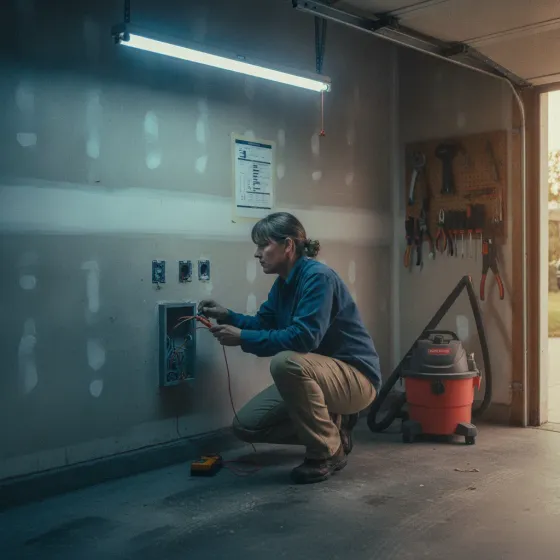
Here's something a lot of folks don't know. Most EV charger installs need an electrical permit, especially when we're adding a new 240 volt circuit or touching the panel. Skipping that step isn't worth the risk, an unpermitted job can cause headaches later if you sell the house or file an insurance claim. We're a licensed electrical contractor working in Denton County, and pulling permits is just part of doing the job right.
So what changes the cost of a job like this? It's rarely one thing.
- How far your charging spot sits from the electrical panel, longer wire runs take more time and material
- Whether your panel has open breaker space or needs upgrading first
- The type of charger and its amperage draw
- Wall type and whether we're running wire through brick, block, or finished drywall
- Permit and inspection fees, these vary by jurisdiction
Older homes near downtown Denton often have panels that were never built to handle a 240 volt EV circuit on top of everything else running in the house. That's not a bad thing, it's just something worth checking before you get your heart set on a specific spot in the garage.
Before you hire anyone, ask a few plain questions. Are you licensed? Will you pull the permit? Have you looked at my panel's capacity, or are you quoting blind? We offer free estimates, verbal or written, on just about any job, and that conversation is the right time to get those answers before work starts.
A charger is the heaviest thing most Denton homes will ever add to a panel, so homeowners planning one often look at outlet and switch installation for the garage at the same time, and at outdoor lighting installation if the driveway is dark. Both are on our electrical installation services in Denton page.
Frequently Asked Questions
Common questions about EV charger installation
How long does electric car charger installation take?
Most installations take about half a day. That includes checking your panel, running the wire, mounting the charger, and testing it under load before we leave. Older Denton homes can take longer if the panel needs extra work first, like added breaker space or a load calculation. We won't know the exact time until we walk your property and see the distance from your panel to where you park. You'll get a clear timeline before any drilling starts.
Will my older Denton home need a panel upgrade?
Maybe, and we'll tell you before we touch a wire. Many homes near downtown Denton were built in the 1960s and 70s with 100 amp panels that weren't designed for a Level 2 charger pulling 30 to 50 amps. We check your panel's rated capacity and how much power your AC and water heater already use. If there's no room left, you might need an upgrade, or we can suggest a smaller charger that fits what your home already supports.
What should I expect when the electrician arrives?
We start by checking your panel, not the charger itself. That's the first thing we look at every time, because the panel decides what your home can safely handle. We measure the distance from your breaker box to the charger location and check for existing loads. You'll get a straight answer about what your house needs before we quote anything or start any work. No surprises after we've already opened a wall.
Do I really need a dedicated circuit for my charger?
Not always. If you drive under 40 miles most days and charge overnight, a regular grounded outlet on its own circuit can work fine for slower Level 1 charging. Many newer Denton garages already have one ready to go. But older homes built before the 90s often share garage outlets with a fridge or freezer circuit, which can trip breakers under a long charging session. We check what your outlet is connected to before ruling out a dedicated line.
How do I schedule an EV charger installation in Denton?
You call us, and we set up a time to walk your property and check your panel first. That visit tells us whether you need a full 240 volt circuit, a panel upgrade, or nothing extra at all. We serve homes across Denton, including older neighborhoods near downtown with smaller electrical panels. Scheduling the panel check early means fewer surprises and a faster path to charging your car at home.
Our Electrical Installation Services in Denton
- Electrical Outlet & Switch InstallationNew outlets and switches wherever you need them, including GFCI for kitchens, baths and garages.
- Fan InstallationCeiling fans for bedrooms, living rooms and patios, mounted on a box actually braced to hold one.
- Light Fixture InstallationCeiling lights, pendants, chandeliers, recessed cans and under-cabinet lighting, wired and tested.
- Outdoor Lighting InstallationPorch, security and landscape lighting — design, trenching, wiring and timers.
See every service on our Electrical Installation Service in Denton page.
Request a Free Estimate
Tell us what you need and we will call you back — usually the same day.
Ready to Get Started?
Get a Free Estimate. Call (972) 971-2131 today.