 Skip to Main Content
How to Find a Problem in an Electrical Circuit, Step by Step
Licensed, owner-run electricians in Denton, TX
- TX Master Electrician #189620
- TX Electrical Contractor #33667
- Denton, TX
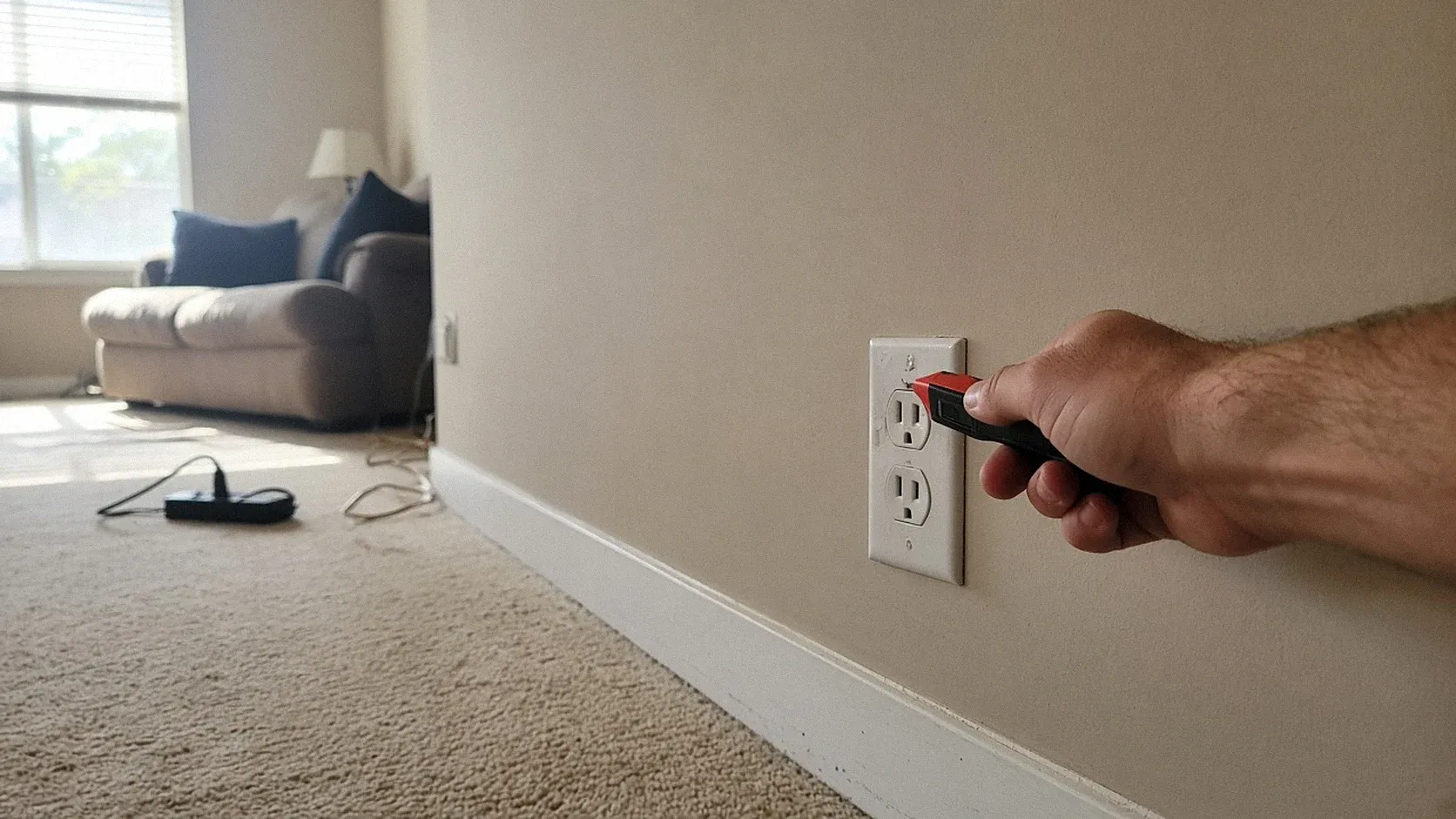
Safety first: if you smell burning or hot plastic, see scorch marks, hear buzzing or crackling, feel a warm panel or cover plate, or see water near wiring, stop. Don't open anything. Turn off the breaker for that area if you can reach it safely and call a licensed electrician. Everything below is for simple checks like resetting a breaker or a GFCI, not for opening boxes or touching wires.
Talk to a licensed Denton electrician
Call now or request service
What It Means to Find a Problem in a Circuit
Finding a problem in a circuit means tracing a symptom back to its real cause. Most issues come down to a few common faults, like loose connections, overloads, or shorts, and knowing which one you are dealing with helps you decide what is safe to check and when to call an electrician.
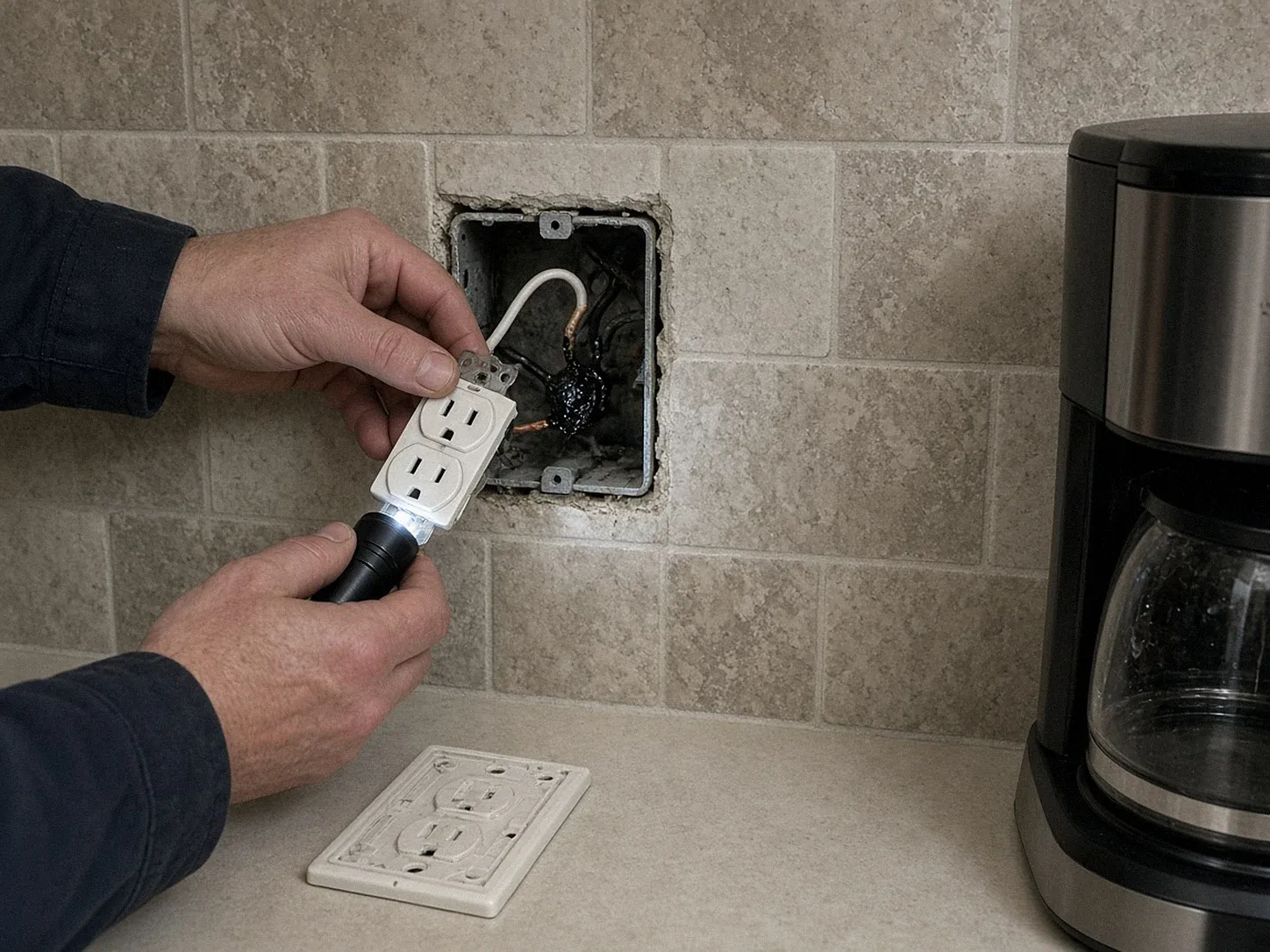
What you see isn't always what is wrong. A dead outlet is a symptom, and the cause might be a few feet away inside a wall or back at your panel. Troubleshooting means following the path power takes, one point at a time, the way you would check a garden hose with no water at the end: is the spigot off, is there a kink, or is there a leak halfway down?
Power leaves the breaker panel, travels through wires to outlets and lights, and returns to the panel. When something interrupts that loop, something stops working or starts acting strange. Most faults fall into a handful of types:
- Open circuit: a break in the path so power can't get through, usually seen as dead outlets or lights.
- Short circuit: a hot wire touches neutral or ground, which often trips the breaker right away and can leave scorch marks.
- Ground fault: power escapes to ground through the wrong path, often near water, and GFCI outlets trip to protect you.
- Overload: too many things pulling power from one circuit, so the breaker trips after a few minutes of heavy use.
- Loose connection: a wire that has worked free at an outlet, switch, or splice, often showing up as flickering, buzzing, or a warm cover plate.
Timing gives you clues. A breaker that trips the instant you reset it points one way, while one that trips after the window unit has run for twenty minutes points another. A loose connection builds heat over time, which is why some faults get worse fast.
Older Denton homes often have wiring that wasn't built for today's loads, and when July hits and AC units run nonstop, weak spots in a circuit start to show up as tripped breakers and warm outlets.
Safety Steps Before You Check Anything
The checks on this page stay outside the walls: the panel, GFCI buttons, and a plug-in tester or lamp. You never need to remove a cover plate or pull an outlet out of the wall to do them.
- Stand on a dry floor and wear rubber-soled shoes.
- Take off rings and watches before you work at the panel.
- Keep a flashlight handy, since the lights may be off.
- Stay away from anything damp. Garages, patios, and outdoor outlets can stay humid for days after Denton's spring storms, so leave wet areas to an electrician.
How electricians verify a circuit is dead
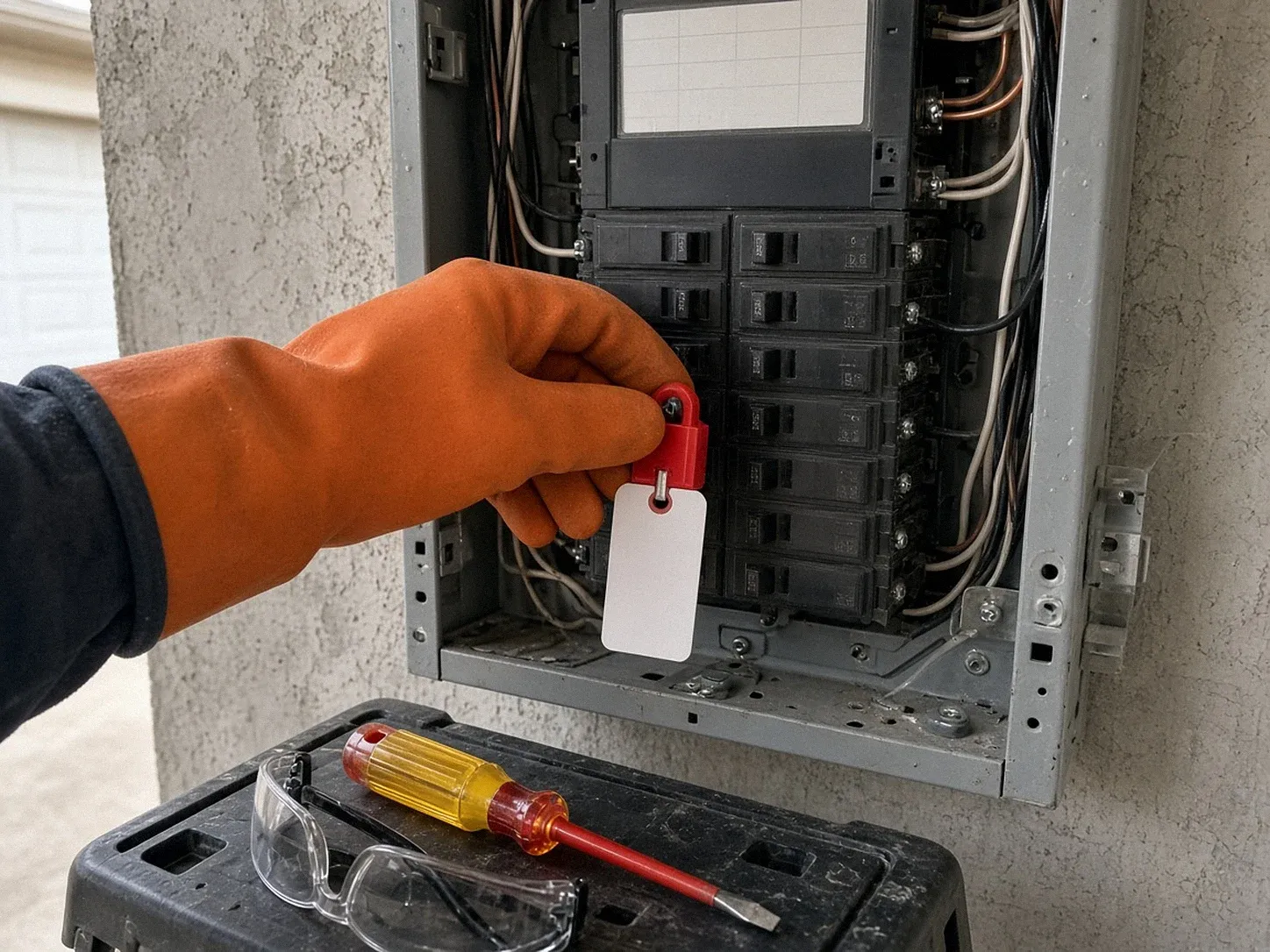
This is what happens on a service call before anyone touches a wire, and it shows why opening boxes is a job for a professional. The electrician turns off the breaker, tests the voltage tester on a known live outlet, checks the circuit that was shut off, tests the live outlet again to make sure the tester didn't quit, and then locks or tags the breaker so nobody flips it back on. Panel labels are often wrong after remodels, and a circuit can even be fed from two breakers, so a professional treats every wire as live until it is proven dead.
If anything in the safety callout at the top of this page shows up while you are checking, stop and step back. Those signs point to heat building somewhere, and that is a fire risk.
Step by Step: How to Narrow Down the Fault
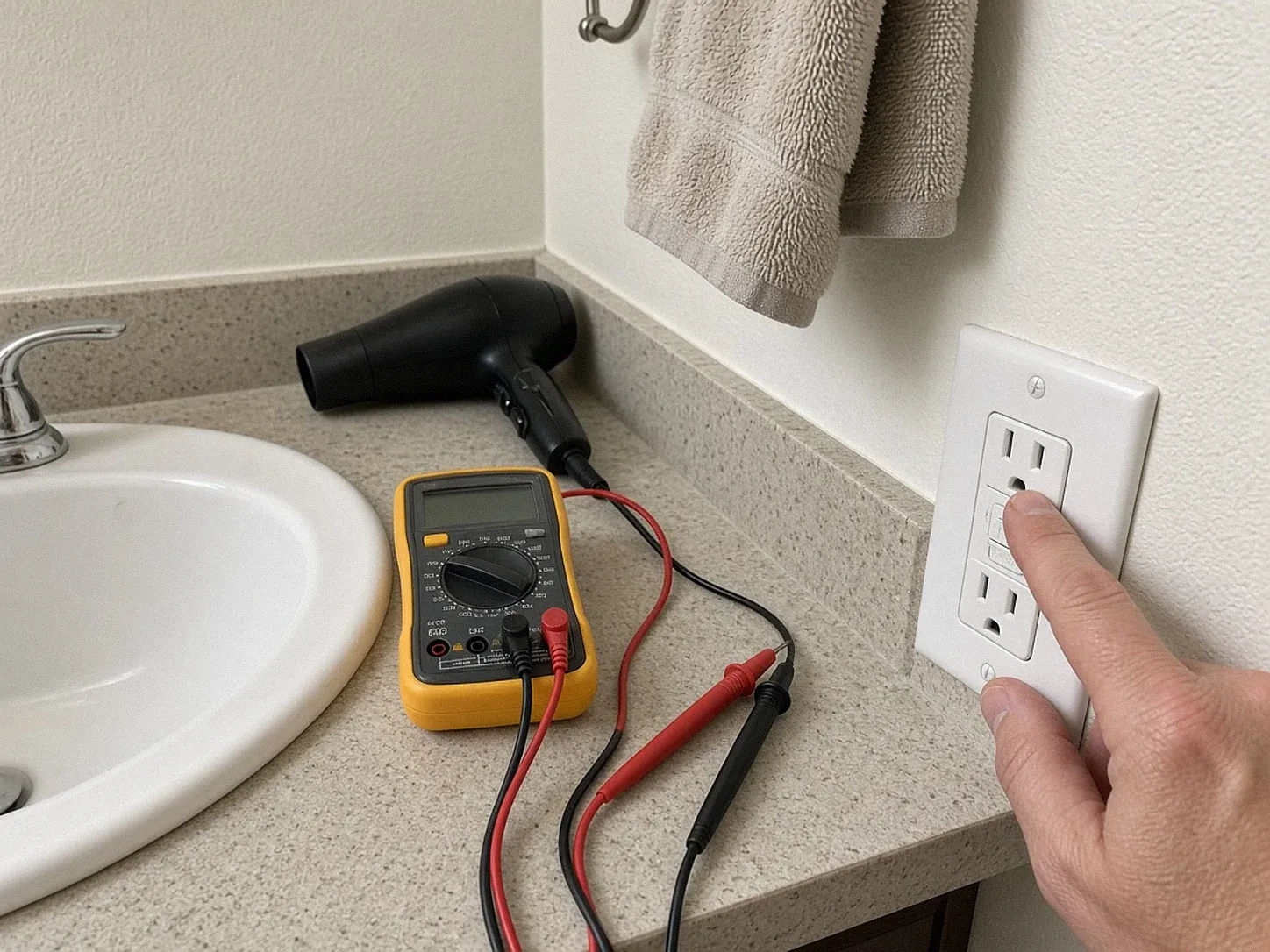
Most circuit problems look like a mystery at first and turn out to be simple once you check things in the right order. Grab a notepad, a flashlight, and a plug-in outlet tester if you have one. A lamp works fine if you don't.
- Write down what isn't working. List every dead outlet, light, and switch, when it started, and what was running at the time.
- Check your breaker panel. Look for a breaker sitting in the middle or toward off, push it fully off, then firmly back on.
- Find every GFCI outlet. These have Test and Reset buttons and are usually in kitchens, bathrooms, the garage, and outside. Press Reset firmly on each one.
- Test each outlet in the problem area with your tester or lamp, and mark which ones work.
- Map the circuit. Turn off the breaker you suspect and walk the house, noting everything that goes dead.
- Unplug everything on that circuit, reset the breaker, then plug items back in one at a time and watch for a trip.
- Stop if you hit a warning sign. A burning smell, a warm cover plate, or a breaker that trips with nothing plugged in means it is time to call a licensed electrician.
Step 3 catches more people than you'd think, because one GFCI can protect several regular outlets down the line, so a tripped GFCI in the garage can kill a bathroom outlet across the house. If resetting a breaker or a GFCI brings everything back and it stays on, you don't need us.
Step 6 is where you learn the most. If the breaker holds until you plug in the space heater, the heater or the load is the likely cause. If it trips with nothing plugged in, that points to a wiring fault like a loose connection, a damaged wire, or a worn-out breaker.
If one outlet is dead but the ones on either side work, the problem is often a loose wire at the last working outlet. Don't pull outlets out yourself. Note which ones work and tell your electrician, because it saves real time on the visit.
Please don't skip step 7. A breaker that keeps tripping is protecting your home, and resetting it for weeks can hide a melted wire behind a switch. Your notes from steps 1 through 6 still matter if you can't fix it, because they help us pinpoint the fault faster. Finding the problem is the job, and fixing it is usually the quick part for a Denton home electrician. Jayson holds Texas Master Electrician license #189620 and Texas Electrical Contractor license #33667.
Frequently Asked Questions
Questions Denton homeowners ask
How do I find an electrical fault in my house?
Start at the panel and work outward: check for a tripped breaker, reset every GFCI, test outlets with a plug-in tester or lamp, and map which outlets share the circuit. Timing helps too, since a breaker that trips instantly often means a short and one that trips after a while points to an overload. If those checks don't find it, call a licensed electrician.
What are the steps to troubleshoot a circuit safely at home?
Write down what isn't working, check the breaker panel, reset every GFCI, test outlets in the problem area, map the circuit, unplug everything and add items back one at a time, and stop at any warning sign. None of these steps require opening a box or touching a wire.
What do electricians use to test circuits?
Electricians use a non-contact voltage tester to confirm a wire or outlet is dead before touching it, and a multimeter to measure voltage, continuity, or resistance. They always check the tester on a known live outlet first so a dead battery can't fake a dead circuit.
How does Denton's weather affect circuit problems?
Summer heat pushes older wiring hard as AC units run nonstop, which brings out loose connections and overloaded circuits. Spring storms and humid weather leave garages, patios, and outdoor outlets damp, so GFCIs trip more often after rain. Damp wiring is a reason to call a professional, not to test it yourself.
Is a loose connection a serious electrical problem?
Yes. A loose connection can cause flickering, buzzing, or a warm cover plate, and it builds heat over time even when nothing seems urgent. Left alone, that heat can turn into a fire hazard, so have it traced early.
Talk to a Licensed Denton Electrician
Call (972) 971-2131 to request service.